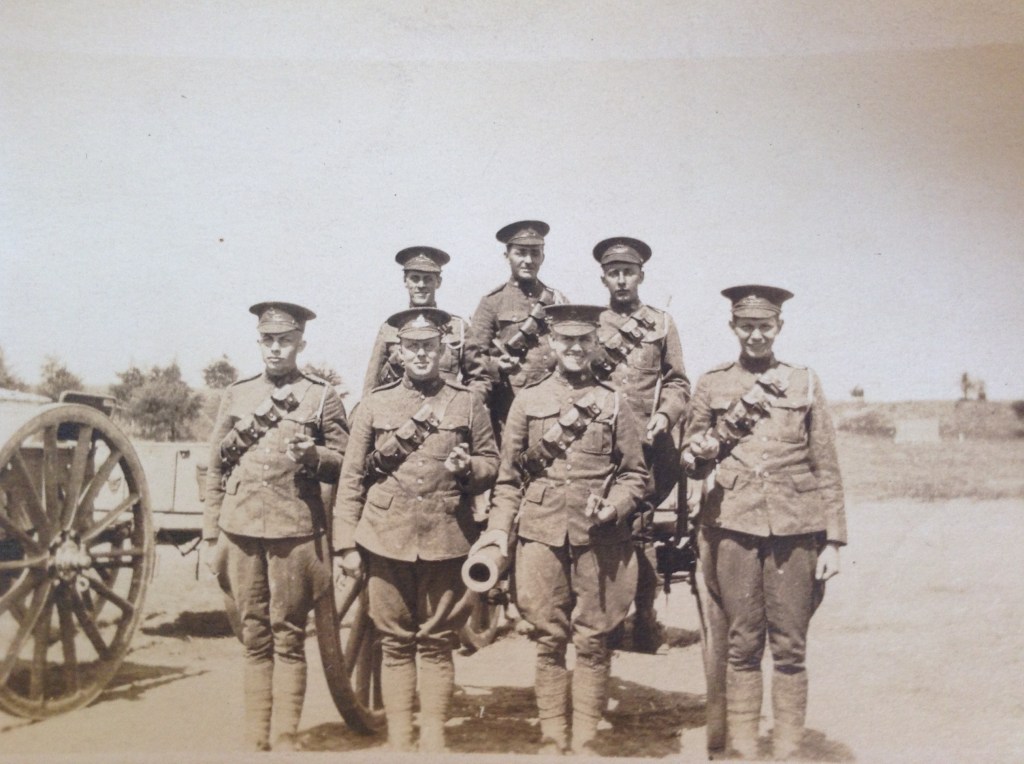
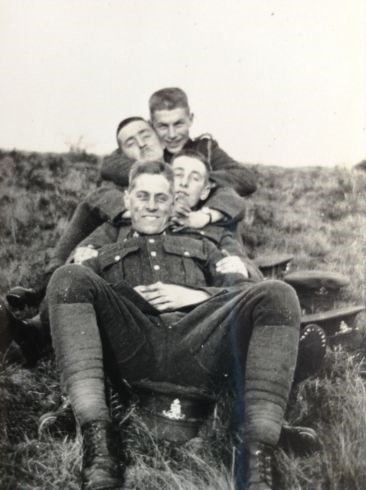
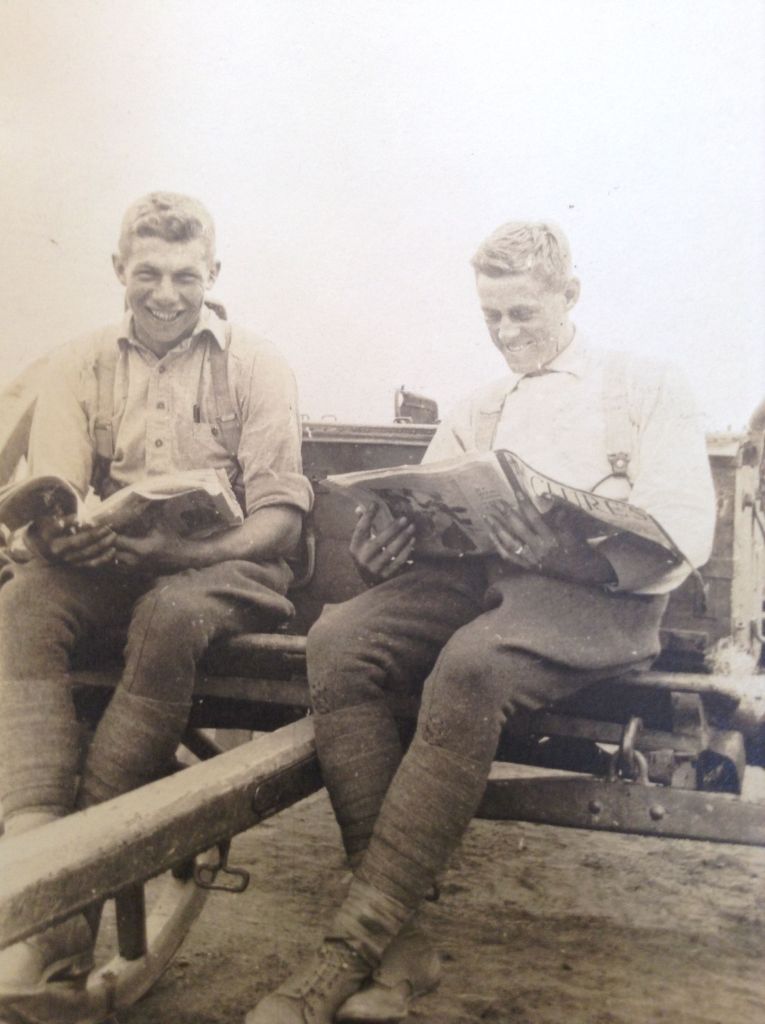
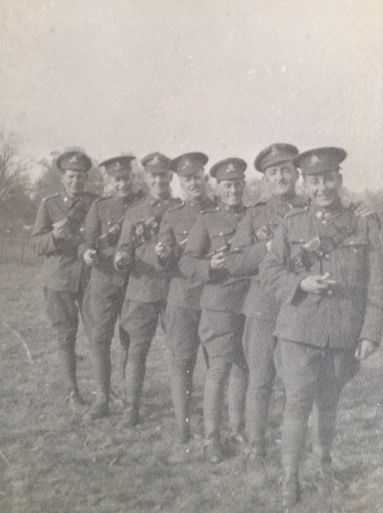
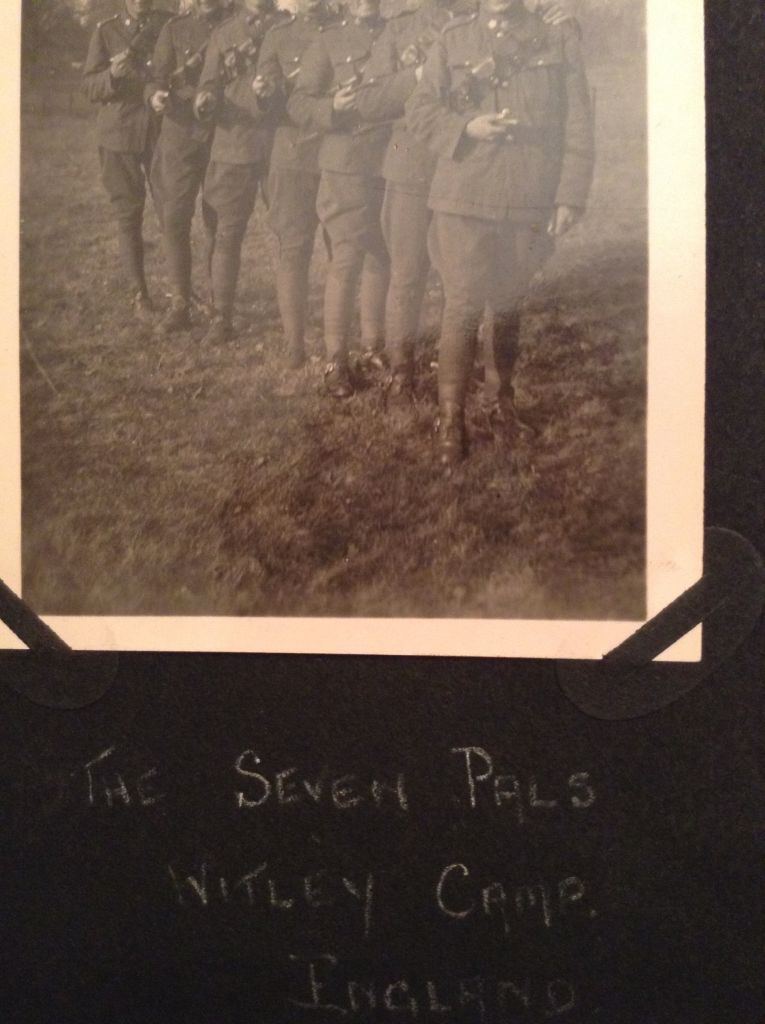
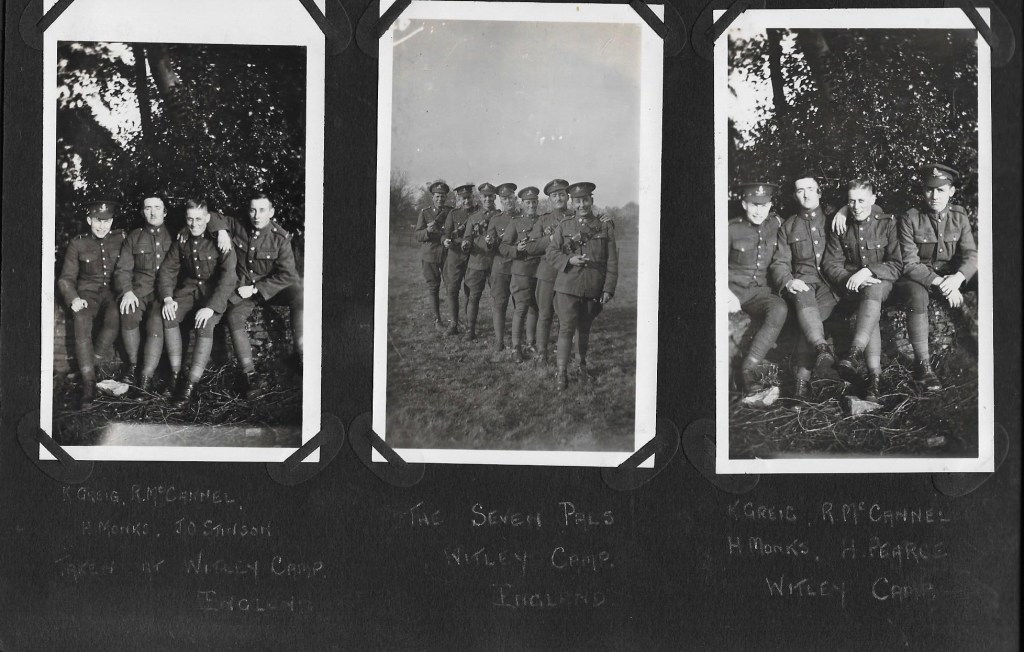
My grandpa Harold Monks left Victoria on May 22 1917 in a draft of men for the Divisional Ammunition Column. [See my article on D.A.C. Recruiting] They were bound for Camp Petawawa. Some of these men appeared in Harold’s World War One photo album.
On the 100th anniversary of Harold Monks enlisting, I wanted to know more about the other men who had left at the same time, and whether Harold may have known them. As I started to look into their backgrounds, I was able to form a picture of all the men (not just those in the photo album) who had left on May 22 1917.
I have been able to identify the people in my grandfather’s photo albums and to find out more in general about all the volunteers who left that day. This analysis of an artillery draft gives a micro history of a group of man, some of whom would not return.
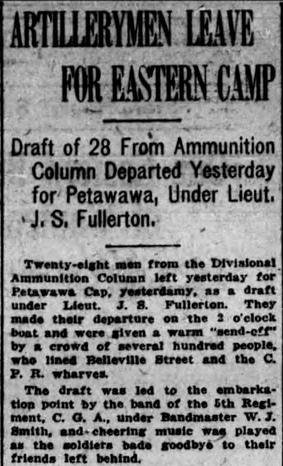
On May 23 1917, The Daily Colonist published an article, ‘Artillerymen leave for Eastern Camp’. It gave the names of the men who left Victoria on May 22 1917: G.W. Armstrong; Allan David Ballantyne; Raymond Harlan Brewster; Robert Redvers Bugslag; Reginald Ciceri; Edward Samuel Dowsett; W.J. Evans; Edward Forrest; James Ellsworth Freel; Louis Sparks Gosse; Ronald Joseph Graham; Stanley Richmond Graham; Kenneth Greig; Cecil Bartholomew Harlow; Herbert Llewellyn Harold; Maurice Richard Littler; Neil Ross McCannel; James Elliot McClellan; Kenneth Creighton Maclean; Edward Donald Marsh; Harold Monks; Harold Marshall Pearce; Edward Radford; Joe Simmons; Joseph Orr Stinson; John Rodger Wood. Their conducting officer was James Thornton Fullerton.
With the exception of 2 names (G.W. Armstrong and W.J. Evans), I have been able to locate the attestation papers – and in most cases the digitized service files – for the men who left with this draft. I have analyzed the draft for occupation, age, where they were born, and lived. To learn more about the volunteers, I looked at censuses and directories and the The Daily Colonist newspaper. I have found some interesting connections between the volunteers.
Part One — Demographics
Trade / calling
The conclusion is that the volunteers were mostly “white collar” or came from skilled trades. There were 8 students and 5 clerks (including 2 bank clerks and one at the Department of Education). The majority of these students and clerks had attended the Victoria High School (10 former or current students). There was one Oak Bay High School student.
Other occupations included: butcher, electrician, florist, horse trader, motor mechanic, reporter, stenographer and dentist. The conducting officer Lieutenant J.T. Fullerton was a civil engineer and a university graduate. There were 3 machinists from the Victoria Machinery Depot, all who enlisted on the same day. Note — though Harold Monks listed his trade as “rancher”, he was actually a fisherman…and he had grammar school education and 7 years’ experience as a bookkeeper in a firm. Thus, Harold actually fits the profile of most of the men.
Ages
The birth dates of the volunteers ranged from 1880 to 1901. (Harold Monks was 24 – at the “old” end of the spectrum.) Most were born around 1897/1898. There were a few “under age” men who had added a couple of extra years onto their age — the three boys born in 1900 said they were born in 1898. The boy born in 1901 said he was born in 1899.
Family situation
There were 5 single volunteers, boarding or living alone. (Harold Monks was living in a shack on Vargas Island). The vast majority of men were living with their families (not a surprise when many were still students or had recently left school). In most cases, the men lived with more than one sibling and both parents.
Among the jobs of the volunteers’ parents I found: school inspector, compositor for Queen’s Printer, mayor’s special body guard, and Premier of British Columbia. Two volunteers – Harold Pearce and Joe Stinson – had fathers who formerly ran a real estate firm together. One volunteer (Thomas McGimpsey) had a father on active service. There were 3 men living with widowed mothers — one volunteer (Edward Dowsett of Oak Bay) had only recently lost his father to illness and would lose his mother a few months after enlisting. Many of the volunteers’ sisters were working — I found 5 stenographers, 4 teachers, a nurse and a cashier at Spencer’s Department Store.
Where they were from
The majority of volunteers lived in Greater Victoria (Victoria – 13, Oak Bay – 6, Lake Hill – 1, Colwood – 1). The other British Columbia volunteers were from up Island – Duncan, Ladysmith and Tofino/Vargas Island. There were two volunteers from Washington State, but who had British Empire connections (one was born in Wales, one was from Australia).
Of the Canadian volunteers, only 9 had been born in British Columbia. 9 were from Eastern Canada but had moved to Greater Victoria at an early age (of note, the vast majority were from the Prairie Provinces – there were 5 volunteers born in Alberta). Two volunteers were from Chesley, Ontario and are believed to have been cousins or family friends. There were 5 volunteers born in the United Kingdom.
Most of volunteers were not native-born Victorians (only 6 of them). Of these, Kenneth Greig’s parents had come from England, via California, a few years before he was born. Robert Bugslag’s parents had emigrated from Denmark. Conducting officer Lieutenant J.T. Fullerton was born in Victoria to English emigrant parents.
Religion
The religions of the volunteers fit with the (in general) Anglo-Scottish immigrant development of Canada. Presbyterian was by far the most common religion (11), followed by Church of England (6) — Harold Monks was C of E. There were 3 Methodists, 2 Roman Catholics, one Baptist and one Jewish volunteer. (The Jewish volunteer, Joe Simmons, was not from Victoria’s well-established Jewish community – he was the Australian horse trader living in Port Angeles.
Part Two — Connections between the volunteers
Census, city directories and digitized copies of The Daily Colonist provided a further level of insight into the volunteers. I was able to form a picture of neighbours, colleagues, and former classmates all enlisting together. I found some interesting connections between the volunteers:
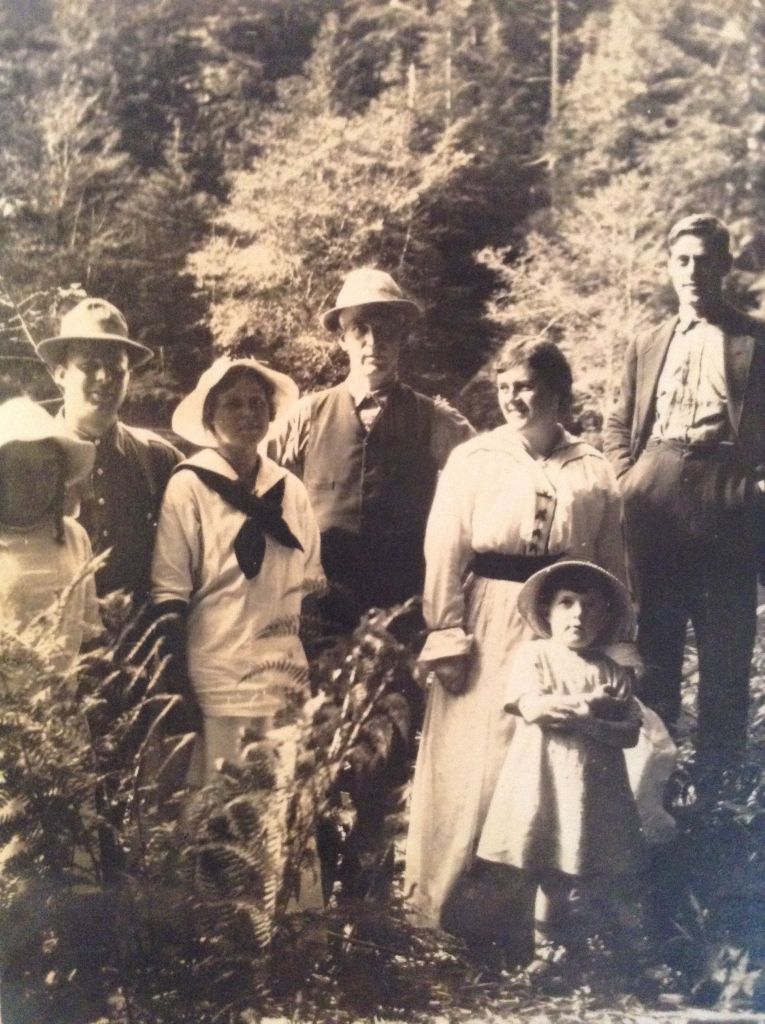
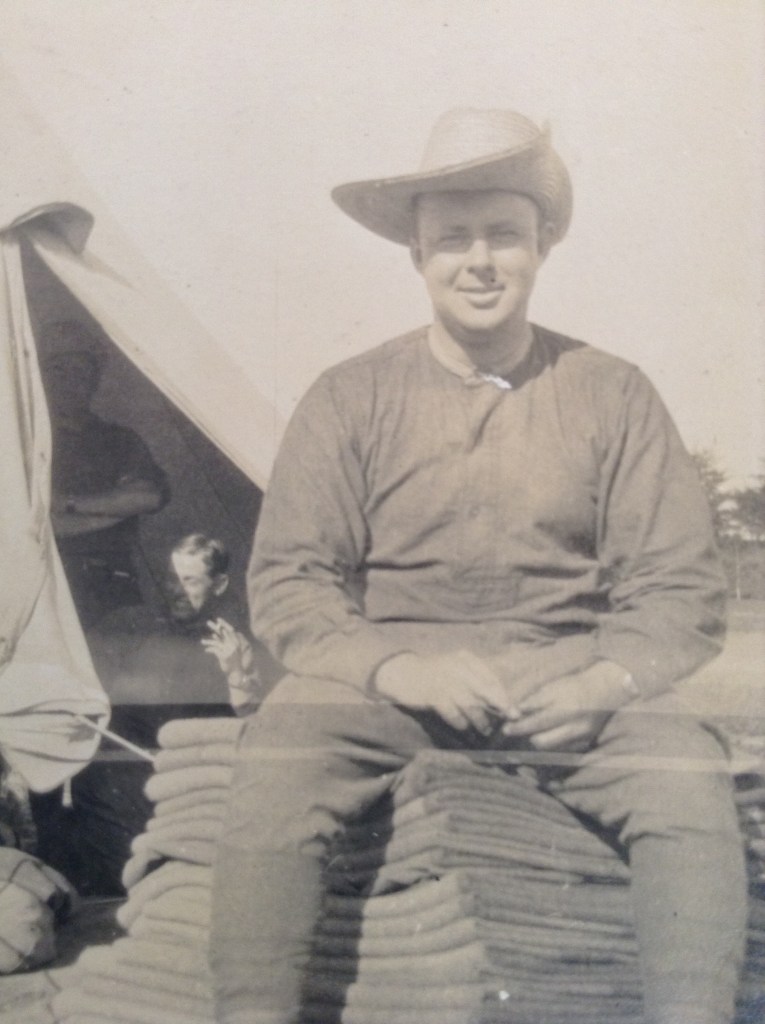
Clayoquot Sound Canning Company connection – Ray Brewster’s dad, Harlan Carey Brewster, was the owner of the Clayoquot Sound Canning Company at Kennfalls, near Tofino. Harold Monks worked at the cannery during 1914 – 1916. The Brewster family used to spend their summer vacations at the cannery. In summer 1916, Ray Brewster was up at the cannery, doing some dental work for local residents. Harold Monks and the Brewsters went on several picnics, as shown in snapshots in Harold’s photo album.
Three machinists at the Victoria Machinery Depot — Edward Forrest, Louis Sparks Gosse and John Rodger Wood all enlisted on the same day. Note – only a few months before, Forrest had been rescued from a workplace accident by Wood.
St Patrick Street Oak Bay — Brothers Ronald and Stanley Graham lived at 1383 St. Patrick Street. Ronald enlisted on the same day as Edward Radford of 1182 St. Patrick. Cecil B. Harlow was from 985 St. Patrick. Another volunteer, William Henry Maxam, lived kitty-corner to Harlow at 1014 St. Patrick. He had just gone out with the April 20 1917 draft direct to overseas. Of these St. Patrick connections, 3 volunteers were “minors” (S. Graham, Maxam and Harlow).
Victoria High School matriculation class 1915 – Ronald Graham and Kenneth Maclean were both in Matric Class “A” at Victoria High School. In the same class was Madge McCannel, the sister of Neil Ross McCannel.
Chesley, Ontario connection – Harold Pearce and Joe Stinson were both born in Chesley, Ontario. Neil Ross McCannel’s father was also from Chesley, Ontario. Harold Pearce’s mother’s maiden name was McCannel, and she was born in Chesley, Ontario. I have not been able find a direct link, but I believe it is highly probable that McCannel, Pearce and Stinson were related – perhaps distant cousins.
Fairfield neighbours – There was a contingent of volunteers from the Fairfield neighbourhood in Victoria – in fact all within a few minutes walk from each other. Joe Stinson at the corner of Fairfield and Trutch lived just around the corner from Kenneth Maclean. Neil Ross MacCannel lived just around the corner from MacLean (almost the opposite lot) on Linden Avenue. Harold Pearce lived at the corner of Linden and Oscar Street. Kenneth Greig had spent a few years in his childhood living across the street from Joe Stinson on Fairfield Road. He later moved to Harbinger Avenue, which is located near Linden and Oscar Streets. Note — Maclean, Pearce and Stinson were all former Colonist newspaper carrier boys.
Part Three – What happened to the men?
Not all service files have been digitized. To date (May 2017) I found records up to the end of the Ms. I also was unable to pin down exactly who 2 volunteers were – G.W. Armstrong and W.J. Evans. With that proviso, I can provide an (initial) view of “what happened”.
Two of the volunteers were discharged from military service in Petawawa:
- James Elliot McClellan was found to be a minor.
- Edward Forrest had a pre-existing injury to his leg – result of a workplace accident
Three others remained in the military but did not serve in France:
- James Ellsworth Freel had a heart condition and was classified “B” and sent to a desk job in Kingston.
- Herbert Harrold transferred to C.E.F. in Siberia.
- Robert Redvers Bugslag was found to be a minor just after arriving in France, and was sent back to England.
Based on currently available service records, I found that 3 men were hospitalized with gas poisoning: Kenneth Greig; Stanley Richmond Graham; Neil Ross McCannel.
Four volunteers were killed in action. While not all files have been digitized, my review of newspaper records and directories in the post-war period has shown that all others returned to Canada.
- Ronald Joseph Graham died of gas poisoning on September 9 1918
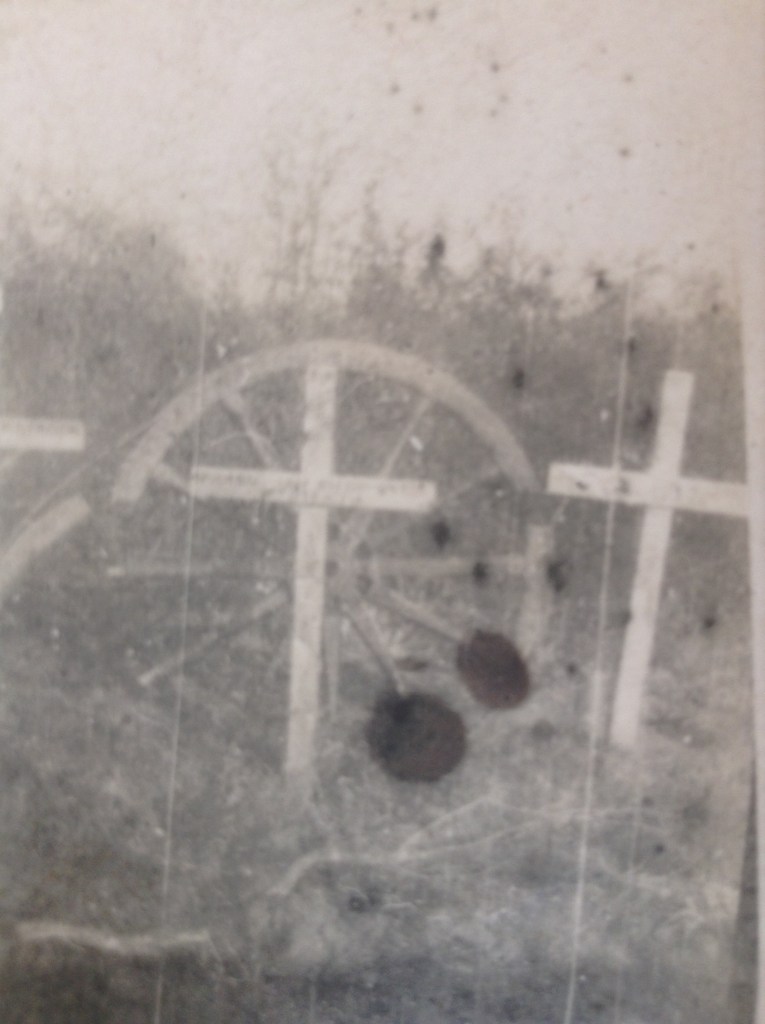
- Raymond Harlan Brewster was killed instantly by a shell on November 1 1918
- Harold Marshall Pearce was “killed in action” on November 5 1918
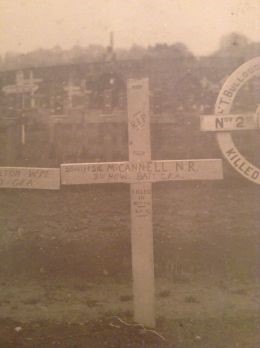
- Neil Ross McCannel died of wounds after a shell explosion on November 6 1918
To conclude, the May 22 1917 draft had 26 men. I have not been able to locate records for 2 men so I am using a number of 24 men who I know what happened to — 4 out of 24 were killed as result of enemy action — about 15%. How does this align with the national average? The Canadian War Museum provides statistics on the cost of war — 424,000 served overseas and 51, 788 died as result of enemy action — 12%. The slightly higher number in this small draft could be the result of the “final push” of the last 100 days — in particular, the November deaths were within days of each other and all in the same region near Valenciennes, France.
Learn More
Read more about some of these young men in their wartime Victoria High School productions of Shakespeare plays in “The Play’s The Thing”, a story I wrote in collaboration of the Vic High Archives.
Conducting officer James Thornton Fullerton returned from war service and moved to Vancouver, where he married and practiced as a civil engineer. He died in Shaughnessy Military Hospital at age 78. I contributed a full profile of Fullerton to Saanich Archives’ “Saanich Remembers WWI” project.
Fullerton was a Gordon Head resident. On January 5 1917, the Gordon Head Athletic Club held a farewell dance in his honour — “A jolly evening was spent by all. A simple supper was served at eleven o’clock and dancing was resumed with added zest.” See my feature on The Story of the Gordon Head Athletic Club during the WWI years.
 Stephanie Ann Warner